

Art Market & Exhibitions
Between the artist’s studio and the visitor’s gaze lie very practical decisions: documenting a work, finding its place, organising transport and explaining its value. This programme brings knowledge of artworks together with the practices of displaying, circulating and selling them.
Your experience is the starting point
You may work in a gallery, support artists or be looking to enter the art market. Your background might be in sales, communication or project coordination. That experience becomes a starting point for understanding the particular demands of this sector.
The project you will develop
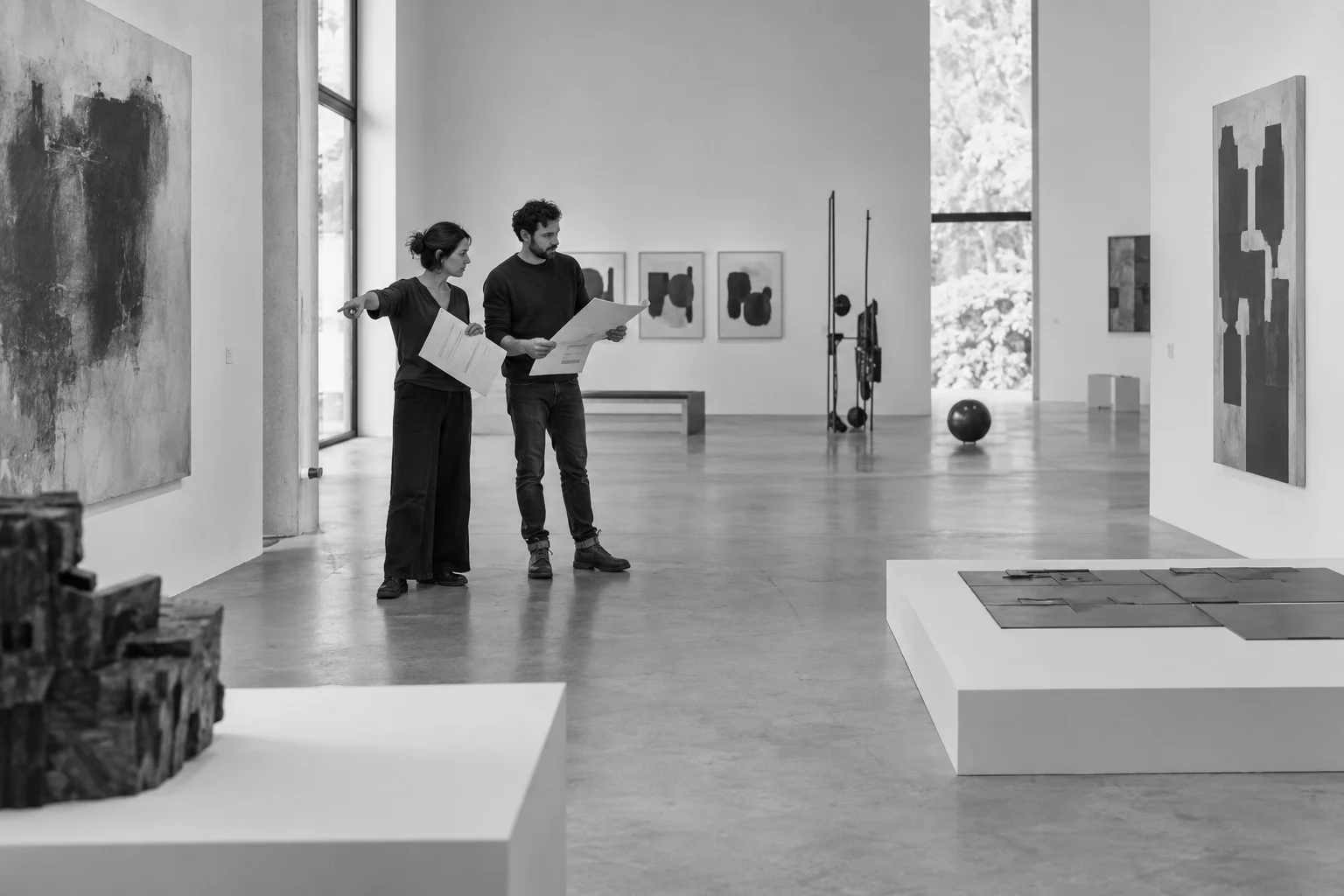
Imagine a selling exhibition in a gallery: bring together a selection of works, develop its narrative, plan the installation and prepare for conversations with buyers. Your portfolio combines artwork documentation, logistics, reasoned valuations and a promotional campaign.
From a project to professional practice.
Each stage begins with a practical question. You research, make decisions and develop the tools to put them into practice.
Understanding and documenting artworks
A work arrives with incomplete documentation. You observe, compare sources and trace its provenance to distinguish what is established from what still needs to be verified.
A documentation file and an appraisal exercise, setting out the sources used and the limits of your conclusions.
Arranging works in a space
Starting from a venue and a narrative, you work towards a coherent display. Dimensions, visitor circulation, the condition of the works and transport requirements all inform your choices.
An exhibition plan, a condition report and a transport file.
Preparing a sale
In a simulated gallery setting, you prepare a valuation, choose a sales method and respond to a buyer’s questions. Each stage of the exchange needs to be explainable and properly documented.
A reasoned valuation and a file for a simulated transaction.
Developing audiences and client relationships
Opening night is approaching. You prepare messages, invitations and press relations, then plan how to follow up contacts beyond that first encounter.
A communication plan, a press pack and a proposal for following up contacts.
The gallery workshop
You bring the elements together in a selling exhibition developed in the workshop. In a workshop presentation, you explain your selection of works, organisation and commercial choices to a review panel.
A complete portfolio and a workshop presentation.
From looking closely to building a case.
Helping others’ art come to life takes sensitivity, reliable information and careful organisation.
Keeping a record of each decision
Case studies gradually enrich your portfolio. A better documented source, a revised transport plan or a clearer message can change how the whole project works.
Seeing from another perspective
Presenting the project means considering the perspectives of the artist, visitor and buyer. Feedback helps you make your proposals clearer.
Careers that bring projects to life.
Planning an installation, documenting a work or supporting a buyer: these situations are part of the exhibition and art market roles below.
- Exhibitions coordinator
- Gallery client relations coordinator
- Art specialist’s assistant
- Auction house assistant
The roles and responsibilities open to you also depend on your experience and the requirements of individual employers.