

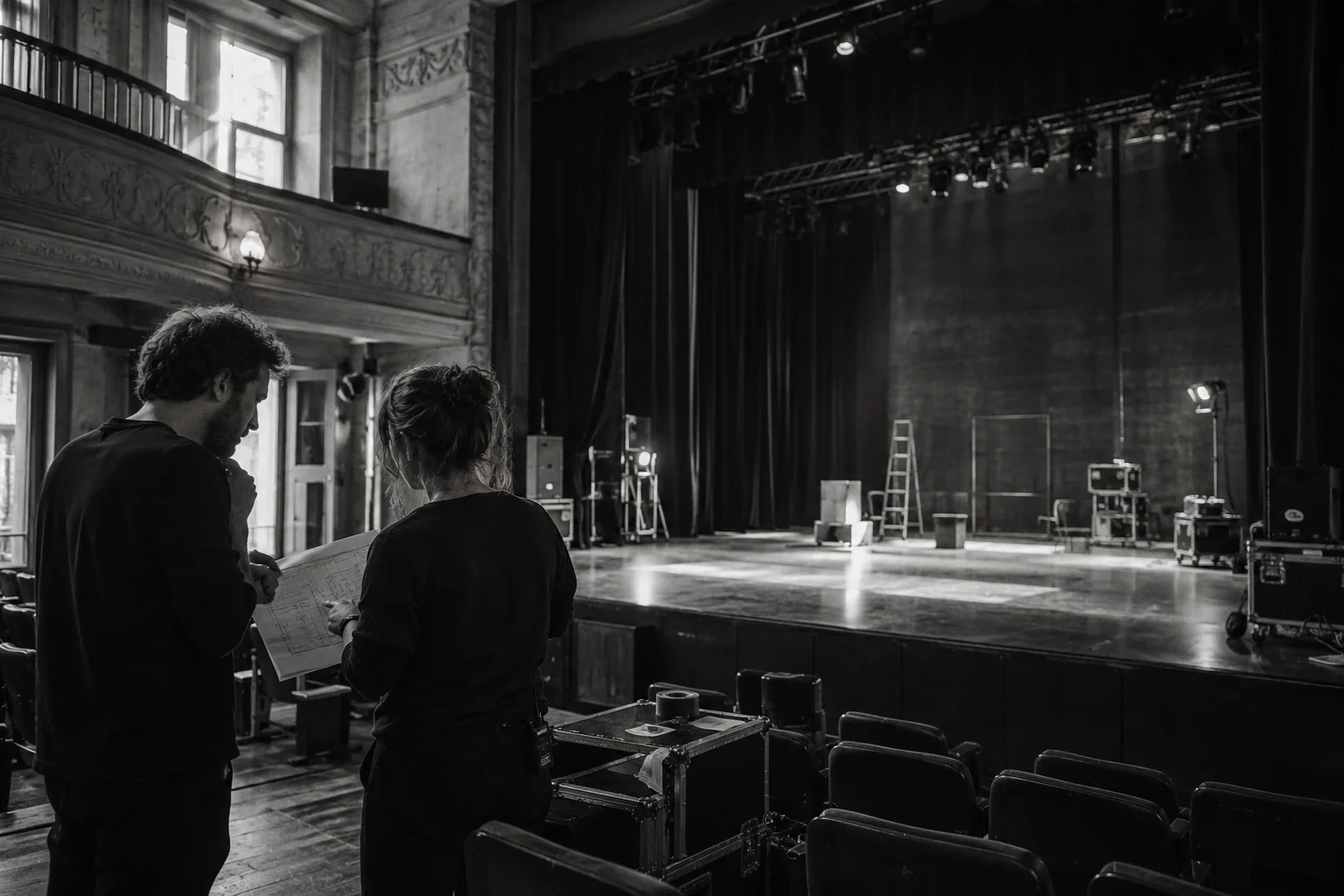
Live Performance Production
A theatre production, a dance piece, a touring show: every performance rests on a long chain of decisions. Booking a venue, costing a journey, preparing a contract, revising a schedule. Producing means creating the conditions in which the artistic team can work and keeping the project on course until it meets its audience.
Your experience is the starting point
You contribute to a company, venue or performance project and want to bring more structure to your practice. You may also be considering production after working in another sector. Your experience informs the work on organisation, cooperation and responding to the unexpected.
The project you will develop
Working from a stage production case study, you prepare a production file: a budget, a rehearsal schedule, arrangements for a performance and potential touring opportunities. The scenario asks you to connect artistic needs, venue constraints and the resources available.
From a project to professional practice.
Each stage begins with a practical question. You research, make decisions and develop the tools to put them into practice.
Feasibility and pre-production
The project is still an artistic statement. You identify artistic and technical requirements, intended audiences and constraints. Initial quotations help you test the ambition against the resources and time it would need.
A feasibility and pre-production file, including quotations, a budget and an initial schedule.
Organising resources and teams
Who needs to be there, when, and with what equipment? You plan staffing, suppliers, transport and venues, taking accessibility and the environmental effects of your choices into account.
A schedule working back from the performance date, an operational plan and a clear allocation of responsibilities.
Administration, funding and rights
Agreements need to become usable documents. You prepare contracts and declarations, identify rights that need to be addressed and track funding and expenditure through to the production’s final accounts.
A budget monitoring document, a contract file and administrative procedures suited to the case study.
Live performance production and touring
A show takes on a different scale when it moves to another stage. You adapt the production to venues and touring, organise rehearsals and ticketing, and prepare materials to present the project to programmers.
A production and performance plan, supported by materials for presenting the show to venues.
Professional project and presentation
You learn to document a professional project: what was planned, the decisions taken and their effects. The report and presentation make your reasoning visible, beyond the outcome itself.
A project report outline and an evidence-based presentation to prepare for an oral assessment.
A performance also takes shape around a table.
Practical exercises address the everyday questions of production: a quotation to discuss, missing information, a schedule to revisit.
Finding a way forward when plans change
A date moves or a technical requirement changes. You assess the effects on the budget and team, then propose a response that remains true to the artistic project.
From documents to conversation
You present an operational plan, explain a decision and prepare discussions between the people involved. Feedback helps make your instructions clearer and your proposal stronger.
Careers that bring projects to life.
Production coordinators, production assistants and touring coordinators connect artistic work with venues, teams and the practical conditions of performance.
- Production officer
- Production assistant
- Production coordinator
- Live performance touring coordinator
The roles and responsibilities open to you also depend on your experience and the requirements of individual employers.